Notarizing Travel Documents For Minors

According to U.S. (CBP), if a child is traveling abroad with one parent, the other parent must supply a notarized letter granting permission. If the child is traveling with an adult other than her parents, both parents must provide written permission.
While U.S. customs officials do not always ask for this documentation, many countries do, and failure to produce notarized permission letters could result in being denied entry.
Requirements
Many parents aren’t familiar with notarial rules and procedures, and may ask to notarize an absent spouse’s signature, not realizing it’s against the law. We cannot do That, Both parents must personally appear before the notary.
Notaries Can’t Give Advice.
As a Notary, we cannot give legal advice regarding the contents of a permission letter or how a document must be completed. If the signer has questions, they will need to contact the company or agency requiring the document for further instructions.
Plan ahead.
International travelers often rush and panic at the last minute to make sure the necessary paperwork is in order prior to imminent departure. Parents who need notarized permission for a child to travel at the last minute may get flustered if their signatures cannot be notarized due to lack of acceptable ID or another issue.
Inspired from David Thun an Associate Editor at the National Notary Association
Some questions signers may ask Notaries — and how we will answer

The duties Notaries perform are strictly regulated by state law. Answering the wrong kinds of questions from signers can get us in serious legal and financial trouble. Below are some examples of risky questions signers may ask Notaries, why these questions are potentially dangerous, and how the NNA’s Hotline Team recommends us to respond.
· “Can’t you just bend the rules to help me out?
· “I forgot my ID. Can’t you just notarize my signature without it?”
· “My kid is sick, and I can’t make it to your office. Can’t I just send the document for you to stamp and pick it up later?”
· “This is an important client. I know the law says you need to ask for his driver’s license, but I don’t want to embarrass him, so would you just notarize without it?”
The Risk: Failing to follow correct procedure is an invitation to lose my Notary License. If we don’t require a signer to personally appear for the notarization, ignore the requirements for satisfactory evidence of identity, or agree to any improper Notary requests, we are breaking the law and opening the document to potential fraud. If a dishonest signer can commit fraud thanks to our negligence, we not only risk our License, but we could be held liable for any damages a victim suffers as a result.
The Recommended Response: If someone asks me to bend or break the rules or ignore proper procedure when notarizing, there’s only one answer: No. If the signer won’t accept that, I won’t proceed with the notarization. It’s better to have an unhappy signer than being sued for negligence or losing my License.
Inspired from an article by David Thun who is the Assistant Managing Editor at the National Notary Association.
Apostille Service
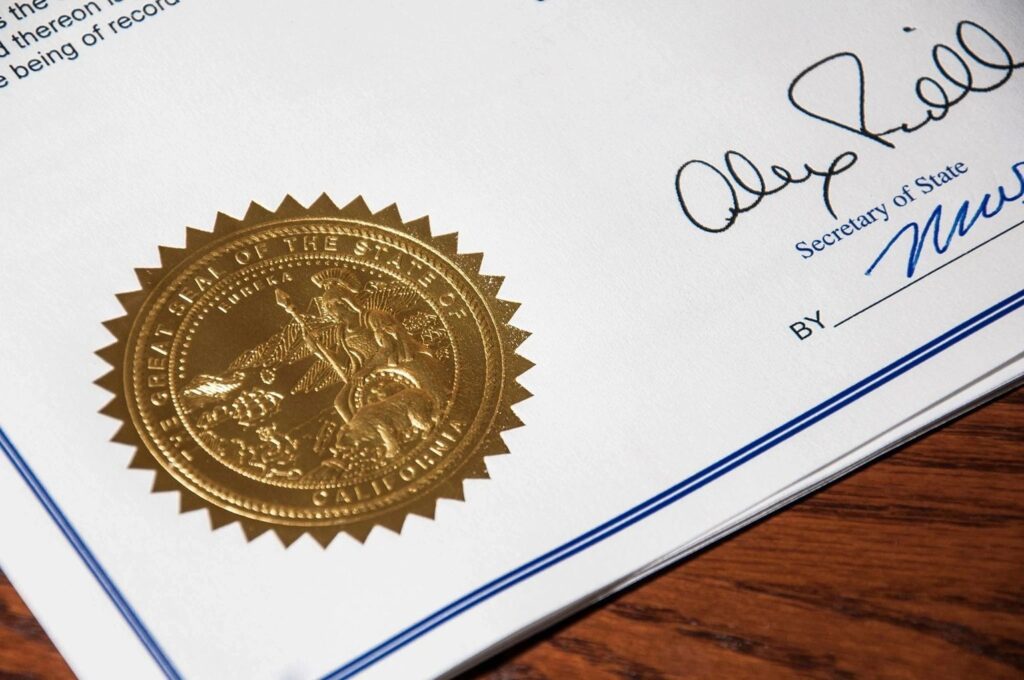
If you need Apostille service done at your place. (Mobile Apostille Service)
We charge a travel fee for Greater Los Angeles area Apostille appointments if we have to come to you.
Non Mobile Apostille service.
If you come to one of our Offices there is no travel fee.
We have a consultant who can provide service 24 hours a day but Advanced scheduling is still necessary. Always call our Apostille Service express number at 626-607-8652.
Please have a current identification such as a drivers license, state identification card, or passport ready at the time of appointment.
We have Experience in most types of documents.
Call Us Now at (626)607-8652 for your Apostille Service appointment or email at adydiamond@yahoo.com
Here are three common misunderstandings about apostille services

Notaries do not issue apostilles
Notaries do not provide apostille certificates to customers
An apostille cannot be issued unless the document is notarized
1. Notaries do not issue apostilles
The most common misconception is that a Notary can issue customers an apostille for a document on the spot. That’s not true, Metayer says. An apostille confirms that the Notary’s commission is valid on notarized documents sent to foreign countries. The notarized document must be submitted to an appropriate state government agency in order to have an apostille attached. Notaries offering apostille services are paid a fee by customers to deliver the notarized document to the government agency that issues apostilles.
2. Notaries do not provide apostille certificates to customers
Customers may also ask if Notaries can provide an apostille certificate for the customer to attach themselves. Again, because Notaries do not have the authority to issue apostille certificates, they cannot provide these certificates to customers.
3. An apostille cannot be issued unless the document is first notarized
An apostille cannot be issued if there is no notarization on the document. If a document needs to be notarized, it can be done by the Notary offering apostille services, but this is not a requirement.
A different Notary can perform the notarization before the apostille is requested. Finally, remember any notarization will be reviewed carefully Whoever notarizes a document that needs an apostille, it’s very important that the document is notarized correctly and all rules are followed, Metayer cautioned. The receiving country will review the document to confirm everything is correct and has the right to reject the document if the notarization was not done properly.
What’s an Apostille?
An Apostille is a certificate that authenticates the origin of a public document, such as a birth or marriage certificate, for use in foreign countries that are part of the Hague Apostille Convention. It simplifies the process of verifying the document’s legitimacy internationally.
Apostille Or Authentications
Apostille certificates and authentication certificates both validate the Notary’s seal and signature on a document for acceptance in a foreign country. Apostilles, governed by the Hague Apostille Convention of 1961, involve a single certification issued by the Secretary of State. Authentication certificates are used for non-Hague Convention countries, requiring multiple certifications from various authorities, including your commissioning agency, the U.S. Department of State, the consul of the destination country, and potentially another official in that country.
Apostille on a Birth Certificate
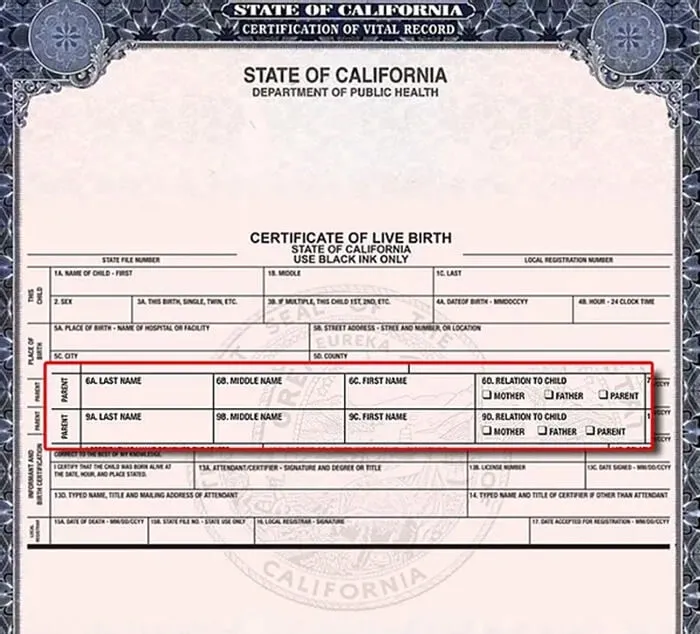
An Apostille is a certificate that authenticates the origin of a public document, such as a birth certificate, for use in another country. It ensures that the document is recognized as valid in foreign countries that are part of the Hague Apostille Convention. Apostilling a birth certificate involves obtaining a special seal or stamp from a designated authority, typically the Secretary of State’s office, confirming the authenticity of the document for international use.
Come for a Coffee!!!!
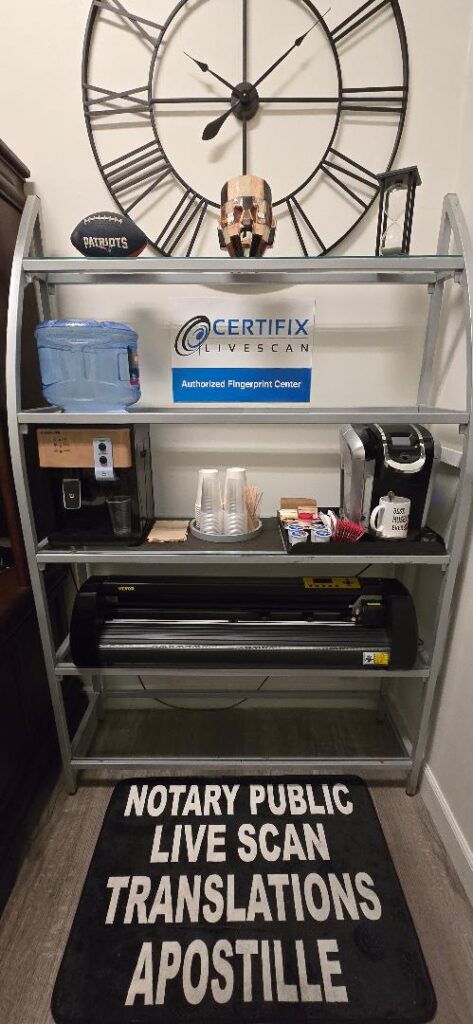
Appointment Only! No Walk-ins. Apostille, Notary, Spanish Translations, DOJ and FBI Background Checks, Live Scan, Document Recording, Marriage License, If you need a Document Translated to Spanish, Notarized and then Apostilled to use in your country, we can do all that. We Apostille Birth Certificates, Marriage Certificates, Death Certificates, FBI Background Checks, Power Of […]
What advantages does Live Scan offer?

The Live Scan technology offers numerous benefits compared to traditional ink fingerprinting methods. It eliminates common issues such as smudging, smearing, and inconsistent inking. One significant advantage of Live Scan is that it enables direct transmission of your fingerprints to the Department of Justice. This direct transfer allows for a swift criminal background check process, as the Department of Justice utilizes the received fingerprints to conduct the check. The results are typically delivered to your employer or licensing agency within 24 to 48 hours.
What is Live Scan Fingerprinting? Live Scan Fingerprinting is a modern digital process used as a substitute for conventional ink fingerprinting in states where it is available. During Live Scan, an applicant’s fingerprints are securely transmitted to a government agency, which then employs an Automated Fingerprint Identification System (AFIS) to conduct a comprehensive criminal history background check.
Live Scan is often mandated by law for specific types of state-issued licenses, employment opportunities, and volunteer positions. It offers various advantages over ink fingerprinting, including superior image quality and faster result turnaround time.
TYPES OF ID’S ACCEPTED IN CALIFORNIA

Notary Guidelines for Accepting or Rejecting a Signer’s ID
Identifying signers is a critical responsibility for Notaries, as it ensures the integrity of the process. However, assessing the acceptability of a particular ID can pose challenges.
Given the wide range of ID types worldwide, it’s highly likely that Notaries will encounter unfamiliar IDs at some point. So, how can we determine if an ID is acceptable? The answer lies in the jurisdiction where the Notary is commissioned. Guidelines vary significantly from state to state, requiring Notaries to be well-versed in their respective state’s ID requirements. These guidelines dictate the level of judgment and discretion a Notary must exercise when accepting or rejecting an ID.
Certain states provide comprehensive lists of acceptable IDs for Notaries. For example, California has specific lists of IDs, and if an ID is not included, a Notary is prohibited from accepting it as proof of identity.
In California, Notaries are allowed to accept the following forms of identification, provided they are current or issued within the past 5 years:
• California driver’s license or nondriver’s ID
• U.S. passport (or passport card)
• Inmate identification card issued by the California Department of
Corrections and Rehabilitation, if the inmate is in prison, or any form of
inmate identification issued by a sheriff’s department, if the inmate is
in custody in a local detention facility
Additionally, California permits the acceptance of the following IDs, provided they contain a photograph, signature, description of the person, and a serial or ID number, and are current or issued within the past 5 years:
Driver’s license or official nondriver’s ID issued by a U.S. state
Canadian or Mexican driver’s license issued by an appropriate public agency
U.S. military ID
Valid foreign passport from the applicant’s country of citizenship
Employee ID issued by an agency or office of a California city, county, or city and county
Identification card issued by a federally recognized tribal government
Valid consular identification document issued by a consulate from the applicant’s country of citizenship, meeting specific requirements (Please note: Matricula consular cards issued by the government of Mexico do not meet California’s statutory requirements.)
It’s important to note that the above information is based on the guidelines as of the provided date and is subject to change.IDs, provided they contain a photograph, signature, description of the person, and a serial or ID number, and are current or issued within the past 5 years:
• Driver’s license or official nondriver’s ID issued by a U.S. state
• Canadian or Mexican driver’s license issued by an appropriate public
agency
• U.S. military ID
• Valid foreign passport from the applicant’s country of citizenship
• Employee ID issued by an agency or office of a California city,
county, or city and county
• Identification card issued by a federally recognized tribal
government
• Valid consular identification document issued by a consulate from the
applicant’s country of citizenship, meeting specific requirements
(Please note: Matricula consular cards issued by the government of
Mexico do not meet California’s statutory requirements.)
It’s important to note that the above information is based on the guidelines as of the provided date and is subject to change.